

Martina Pariente: “Wine should reflect its terroir, but also the people behind it”
Interview with Martina Pariente, winemaker at Bodegas José Pariente. She discusses trends, Verdejo, sustainability and how a wine’s origin shapes its future.
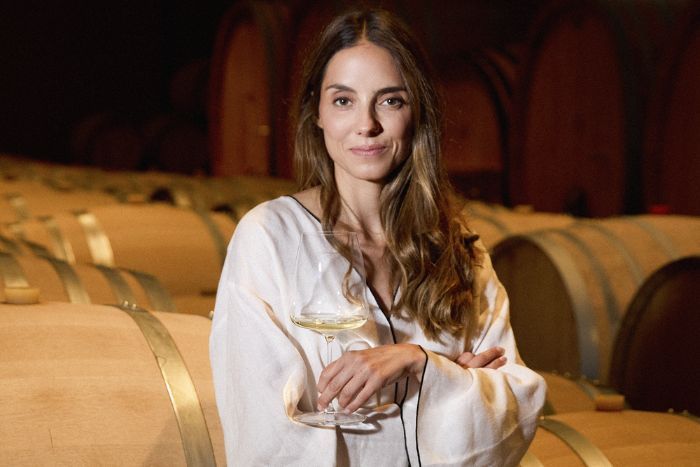
Talking to Martina Pariente is to enter a world of wine where origin takes precedence, and intervention is kept to a minimum. From Bodegas José Pariente to projects such as Prieto Pariente and A Vilerma, her approach connects different regions through a single philosophy: listening to the vineyard.
In this interview, she reflects on where consumption is heading, which myths still weigh heavily on the sector, and why consistency defines a winery better than any trend. She also discusses the balance between heritage and evolution, the role of the Verdejo grape variety, and how wine takes on meaning when you get to know the person behind it.
His message is clear: less artifice, more precision. Wines that convey the landscape, but also human stories. Because, ultimately, a bottle isn’t just opened; it’s interpreted.
Which wine would you always take home… other than your own?
I’d take a wine born from a vineyard with an identity and a story behind it. I’m particularly drawn to wines that convey the landscape, that speak of the place they come from.
But I also like to have wines at home made by friends. Ultimately, wine is very much about people: the winegrowers, the projects behind them, and the relationships that form around a bottle. When you meet the person who made it, the wine takes on another dimension and is enjoyed differently.
That’s why I usually choose wines that, as well as reflecting their origin well, also have a human story behind them.
What trend in the world of wine do you think will shape the coming years?
On the one hand, consumption is shifting towards fresher wines with a lighter profile, which could explain a growing trend towards whites and rosés.
At the same time, there is increasing focus on winemaking methods, driving more sustainable practices, the use of lighter bottles, and a greater appreciation of indigenous grape varieties and high-altitude vineyards, which help preserve freshness in the face of climate change.
The way we consume wine is also changing. In restaurants, for example, the range of fine wines by the glass is growing, making it easier to discover new projects and regions. Ultimately, I believe all these trends point to the same thing: wines that are more refined, more closely linked to their origin, and produced with greater environmental awareness.
Which wine myth would you like to dispel once and for all?
Perhaps the idea that a wine’s value depends solely on its price or its fame. I believe that true value lies in the vineyard, in the work that goes into it, and in that wine’s ability to express a place.
I’d also like to dispel the idea that wine has to be complicated to be good. Great wines can be deep and complex, but at the same time, they should invite you to drink them, stir your emotions, and connect with whoever tastes them.
What must a winery offer to truly stand out in such a competitive sector?
I believe the key lies in consistency: having a clear vision of the kind of wines you want to make and sticking to it over time.
In such a competitive sector, where there are so many interesting projects, what really sets a winery apart is its identity. When there is a genuine understanding of the vineyard, a deep connection with the terroir, and a unique way of interpreting that origin, that personality ends up being reflected in the wines.
It is also important not to try to follow every trend, but to remain true to what the place has to offer. That consistency, maintained year after year, is what builds trust and makes the wines recognisable.
If your portfolio had a soundtrack, what would it sound like?
Perhaps The Beatles. In their day, they were innovative and broke many moulds, but they did so with an elegance and sensitivity that has ensured their music continues to resonate with different generations.
Moreover, they knew how to evolve without losing their identity. Each stage brought something new, but you always recognise that the same project lies behind it. I think something similar happens with wine: when there is a solid foundation—a terroir, a grape variety, a way of understanding viticulture—wines can evolve over time without losing their essence.
In the end, as with great songs, what endures is not the trend of the moment, but authenticity.
What is it about your wines that you think defines you as a winemaker?
I seek precise and balanced wines, closely linked to their origin. I aim for them to have freshness, tension, and elegance, but above all, for them to be a portrait of the terroir.
For me, the wine must convey, through its aromas and texture, the place from which it comes. Winemaking must complement the vineyard, not impose itself upon it.
You are the natural continuation of a highly acclaimed family project. What has it been like for you to take on the technical role in a winery where the identity is so clearly defined?
I have approached it with a great sense of responsibility, but also quite naturally. The project’s identity is very clear, and that, in fact, helps a great deal.
Both my brother Ignacio and I know where we come from and what values we want to uphold. Our job is to safeguard that legacy and continue to evolve, adapting to changes without losing our essence.
Verdejo is the heart of José Pariente, but it is also a variety that sparks debate. What would you like people to understand better about it? Are you worried that ‘fads’ might affect how it is perceived?
I’d like people to better understand that Verdejo has an enormous capacity to express the terroir. It’s a variety with a lot of personality and, moreover, impressive versatility, which allows us to produce wines with very different profiles and a remarkable capacity to evolve in the bottle.
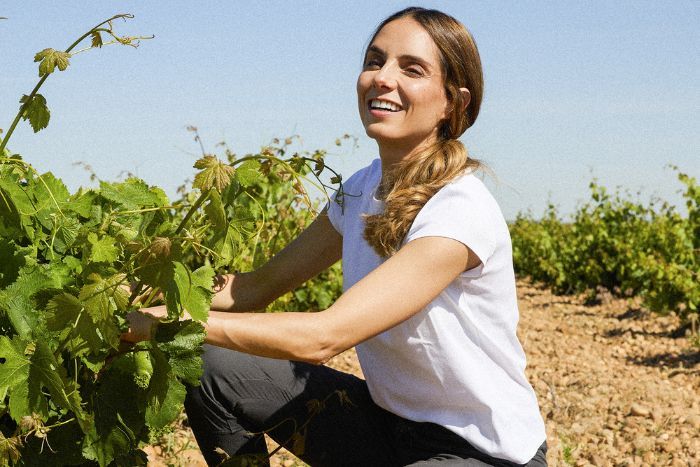
Fashions come and go, but grape varieties deeply rooted in their terroir always find their place. The key lies in tending the vineyard well and interpreting the variety with respect.
Prieto Pariente took you to a completely different landscape. What have you learnt from the old vines of those moorlands and from working with a character so different from that of Rueda?
Above all, the old vineyard teaches you respect and patience. These are vines that have been living alongside their environment for many decades and have developed a unique balance with the soil, the climate, and the landscape around them.
You cannot approach them in a hurry or with overly rigid ideas. First, you must observe them, understand how they behave, and adapt to their rhythm.
In Rueda, we also work with century-old vineyards, so although the character of the wine is different, the way we work in the vineyard is practically the same: listening to the vineyard and accompanying it.
A Vilerma is a different story: Atlantic, fresh, humbly complex. What does this project bring you and what have you discovered in Galicia that you didn’t expect?
For me, Vilerma is a breath of fresh air. It’s about broadening my horizons and starting from scratch.
It’s an estate steeped in history, surrounded by a landscape of terraced vineyards that makes an immediate impression. Once you get to know it, you quickly realise it’s a place with a very distinct identity, where the vineyard is an inseparable part of the landscape.
That combination of history, native grape varieties, and such a unique setting was what won us over. Through it, I have discovered a paradise, a refuge, and a new way of understanding viticulture.
What recent technical decision—in the vineyard or in the winery—do you feel has marked a turning point in your winemaking approach?
We are increasingly focusing on the vineyard and on gaining a better understanding of each plot. This work on zoning and more precise viticulture allows us to harvest each vineyard at its optimum moment and vinify it in a more respectful way.
Rather than a single technical decision, I would say it is an evolution in the way we work: intervening less in the cellar and trusting more in the expression of the vineyard when it is well-cultivated.
Three projects, three territories, three identities… What common thread, in your view, links José Pariente, Prieto Pariente, and A Vilerma?
For me, the common thread is clear: one family, three territories, and a shared respect for the terroir.
At Bodegas José Pariente, our approach to wine was born. Rueda taught us that everything begins in the vineyard: studying the soil, understanding the grape variety, and working to ensure that each wine is a true expression of its place.
With Prieto Pariente, we broadened that perspective to other landscapes, such as El Bierzo. There, the Godello grape and the mineral-rich slopes allow us to interpret a territory with a very distinct personality.
And at A Vilerma, in the Avia Valley, that connection to the terroir is experienced in a very special way. Working with native grape varieties on a historic Ribeiro estate connects us to the landscape, tradition, and wine-growing culture of Galicia.
Ultimately, although each project has its own identity, they all share the same philosophy: that the terroir should define the character of the wine.
Martina Pariente’s vision is based on a simple idea: wine is not made in the cellar; it is interpreted from the vineyard. In the face of trends and noise, she champions precision, respect, and consistency.
Three pillars that, maintained over time, give rise to recognisable and meaningful wines. In a constantly changing sector, her approach points in a clear direction: to better understand the terroir in order to produce wine with greater intention and less intervention.