

The Influence of Altitude on Wines
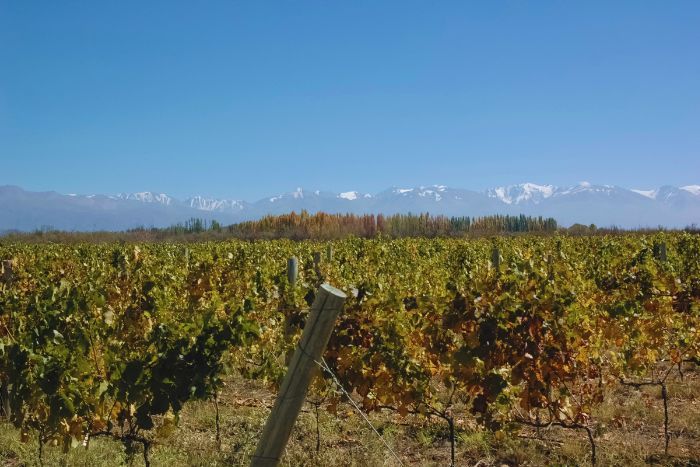
What changes when vines grow closer to the sky
At first glance, two vineyards planted with the same variety may look identical. However, if one sits at 300 metres above sea level and the other is above 1,000 metres, the growing conditions will be very different, and often so will the wine they produce.
Altitude influences temperature, the speed at which the grapes ripen and the balance between sugar and acidity. That's why, when we talk about high-altitude wines, we're not talking about a passing trend or a mere geographical feature, but about a factor capable of profoundly shaping a wine's style.
But what does it actually mean to grow vines at altitude? And how is that influence perceived in the glass?
What is a high-altitude wine?
There is no universal definition.
What counts as a high-altitude vineyard depends largely on the country and the region. In some parts of Europe, high-altitude viticulture is already spoken of from around 700 or 800 metres, whereas in regions such as Mendoza, in Argentina, it's common to find vineyards above 1,000 metres above sea level.
Rather than a specific figure, what matters is understanding that altitude alters the environment in which the vine grows.
And when the growing conditions change, so does the wine.
The higher up, the lower the temperature
The relationship is simple: the higher the vineyard climbs, the more the temperature drops.
Broadly speaking, the average temperature falls by roughly one degree for every 100 metres of altitude. That may not sound like much, but for a plant as sensitive as the vine, it makes a decisive difference.
Cooler temperatures allow the grapes to ripen more slowly, letting the aromas develop with greater precision and helping to preserve a natural acidity that lends balance and freshness.
For this reason, many warm regions have turned to altitude as a way of safeguarding the quality of their wines.
The importance of diurnal temperature range
Besides milder temperatures, high-altitude vineyards tend to benefit from a greater diurnal temperature range, that is, a more pronounced difference between daytime and night-time temperatures.
During the day, the heat encourages the grapes to ripen. At night, the drop in temperature slows the plant's metabolic processes and helps preserve aromas and acidity.
This combination favours:
- More balanced ripening
- Greater freshness
- More defined aromas
- More intense colours in red varieties
- Better balance between ripeness and tension
It's no coincidence that many of the most precise and elegant wines in the world come from vineyards located in elevated areas.
£10
Special offer available for a minimum purchase of £99. Discount voucher valid for four weeks from issue date. Cannot be used in conjunction with other promotions except for the free delivery special offer.
How does altitude show in the glass?
Altitude never acts alone. Other factors also come into play, such as the soil, the grape variety, the climate or the work of the winemaker.
Even so, there are characteristics that tend to recur in many wines from elevated vineyards.
In white wines
High-altitude whites tend to offer:
- A greater sensation of freshness
- Livelier acidity
- More defined aromas
- More taut, vertical profiles
It's common to find especially expressive wines, with pronounced citrus, floral and mineral notes.
In red wines
In reds, altitude tends to translate into:
- More precise, clearly defined fruit
- Less sensation of heaviness
- Better balance between alcohol and freshness
- Finer tannins
- Greater ageing potential
These are wines that combine concentration and elegance, intensity and balance.
Altitude also has its challenges
Mountain viticulture isn't always straightforward.
Producers must contend with conditions that can complicate work in the vineyard:
- Greater risk of frost
- Hailstorms
- Strong winds
- Slopes that are difficult to mechanise
- Higher growing costs
What's more, not all varieties respond equally well to these conditions.
For this reason, altitude can be a great ally, but it also calls for particularly careful management.
Regions where altitude makes the difference
The influence of altitude can be found in numerous wine-producing countries.
Gredos (Spain)
The Garnachas of the Sierra de Gredos, often grown between 800 and 1,200 metres, stand out for their floral profile, their freshness and a lightness that's surprising for the variety.
Calatayud (Spain)
The old high-altitude Garnachas combine concentration and power with a freshness that defies many of the clichés about Mediterranean wines.
Ribera del Duero (Spain)
Many of its vineyards lie above 800 metres. This helps preserve the freshness of the Tempranillo even in particularly warm years.
Uco Valley (Argentina)
It is one of the world's great benchmarks for high-altitude viticulture.
Here you'll find some of Mendoza's most prestigious vineyards, often situated between 1,000 and 1,500 metres above sea level. Producers such as Catena Zapata have shown how altitude can bring freshness and precision to varieties such as Malbec.
Costers del Segre (Spain)
In the Lleida Pyrenees, some projects have used altitude as a tool to craft particularly fresh, precise wines within a Mediterranean setting.
Wineries such as Castell d'Encús, founded by Raül Bobet, work with vineyards situated between 850 and 1,250 metres above sea level, a rarity on the Spanish wine scene. This combination of altitude, diurnal temperature range and slow ripening gives rise to wines of great tension, freshness and ageing potential.
Etna (Italy)
On the slopes of Mount Etna, some vineyards reach altitudes that are unusual for such a southerly region.
The combination of altitude, volcanic influence and Mediterranean climate produces wines that are especially taut, aromatic and elegant.
Does more altitude mean better wine?
Not necessarily.
The quality of a wine never depends on a single factor.
The variety, the soil, the orientation of the vineyard, the climate and the work of the winemaker remain just as important.
Altitude doesn't guarantee excellence, but it can bring something increasingly valuable: freshness, balance and aromatic precision.
And when these qualities combine with a great vineyard and careful winemaking, the results can be extraordinary.
High-altitude wines to discover
The best way to understand the influence of altitude is to experience it in the glass.
That's why we've put together a selection of wines from some of the most interesting high-altitude regions in Spain, Italy and Argentina. An opportunity to discover how the mountains, the diurnal temperature range and slower ripening can give rise to very different styles, yet with something in common: a remarkable sense of freshness and balance.