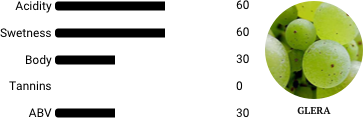
Glera
According to some scholars, the glera existed in Veneto right back from Roman times. This may be true, but the history of this grape is definitely all centred in more recent times: it is, in fact, the grape used to make Prosecco. It is a wine of enormous success, whose commercial history led Italian legislation to extend the appellation reserved to it from the classic area, the Treviso region, to the entire Triveneto: all of Veneto and a large part of Friuli. As a result, glera spread enormously throughout this area, substituting other grape varieties. Of excellent vigour and constant productivity, glera is a grape that is not particularly acid-rich (traditionally it was corrected during vinification with the local verdiso), and is capable of good aromatic and sugary concentration only in the most suitable areas.
Glera
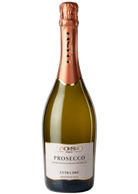
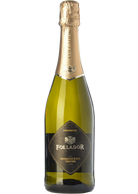
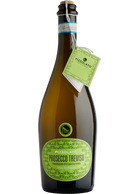
According to some scholars, the glera existed in Veneto right back from Roman times. This may be true, but the history of this grape is definitely all centred in more recent times: it is, in fact, the grape used to make Prosecco. It is a wine of enormous success, whose commercial history led Italian legislation to extend the appellation reserved to it from the classic area, the Treviso region, to the entire Triveneto: all of Veneto and a large part of Friuli. As a result, glera spread enormously throughout this area, substituting other grape varieties. Of excellent vigour and constant productivity, glera is a grape that is not particularly acid-rich (traditionally it was corrected during vinification with the local verdiso), and is capable of good aromatic and sugary concentration only in the most suitable areas.
This is where there is the substantial difference between Prosecco from the plains, neutral and with a simple aromatic profile, and that from the hills, more complex and structured. The most suitable area is the hills of Valdobbiadene, Conegliano and Asolo. From these vineyards, which are UNESCO World Heritage Sites, we obtain a pale, fruity, straw-coloured Prosecco with notes of apple and pear, aromatic herbs and wild flowers. On the palate, in addition to the typical effervescence, the profile is based on sapid, fresh notes, with softness enhanced by the classic (extra dry) or moderated by the more tense, modern taste (brut). It is also vinified still, but it is rare, and the result is a simple and delicate aromatic wine, for an aperitif, even in the Euganean Hills version called serprinio. In small areas it’s also suitable for withering.