

What is the difference between Ultreia Saint Jacques and Pittacum?
Discover the key differences between Ultreia Saint Jacques and Pittacum. Compare freshness, structure, ageing potential and food pairings in Bierzo Mencía.
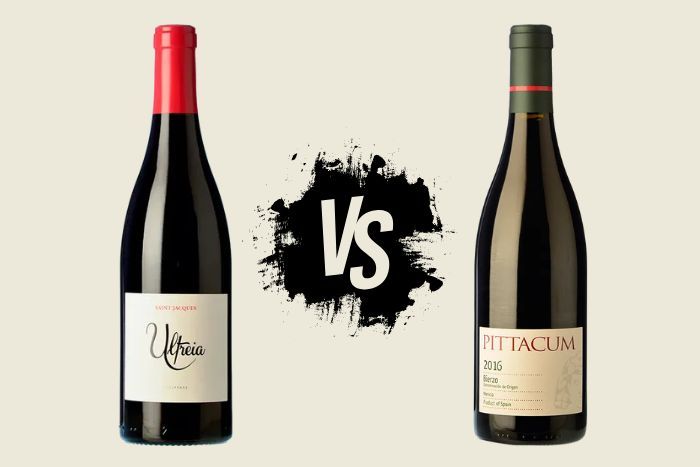
Ultreia Saint Jacques highlights freshness and tension, while Pittacum offers more body, structure and ageing depth from old-vine Mencía in Bierzo.
Both wines come from the same region and grape variety, yet they express two distinct stylistic choices. The difference is not quality, but interpretation. One focuses on precision and energy. The other leans into volume and structure.
What makes Bierzo suitable for Mencía wines?
Bierzo’s Atlantic and continental mix creates slow ripening, fresh acidity and aromatic intensity, ideal for expressive Mencía wines from old vines.
El Bierzo sits in north-west Castile and León, in a climatic transition zone. Atlantic influence brings freshness. Continental conditions add temperature contrast. This combination supports gradual ripening and balanced phenolic development.
Many vineyards contain slate and clay soils. Old bush-trained vines with low yields concentrate flavour. The result is Mencía with crisp fruit, defined acidity and aromatic clarity.
What is Ultreia Saint Jacques like in the glass?
Ultreia Saint Jacques is a vibrant, medium-bodied Mencía with red fruit, floral notes, mineral tension and lively acidity that drives a long, fresh finish.
Produced by Raúl Pérez, this wine reflects a minimal intervention philosophy focused on vineyard expression. The colour is bright ruby. Aromas centre on fresh red berries, subtle florals and mineral undertones.
Oak ageing supports rather than dominates. On the palate, acidity provides lift and length. The structure is fine. The sensation is vertical and energetic rather than dense.
If you prefer lighter reds with clarity and precision, this style will likely suit you.
What is Pittacum like in the glass?
Pittacum is a fuller-bodied Mencía with ripe black fruit, spice and cocoa notes, polished tannins and a broader structure suited for ageing.
Made from old vines by Bodegas Pittacum, this wine shows deeper colour and greater aromatic concentration. Black fruit tends to dominate. Ageing introduces spice and subtle cocoa nuances.
The palate is broader and more enveloping. Tannins are present yet refined. Oak influence carries more weight compared to Ultreia, though integration remains balanced.

If you enjoy reds with volume and structural presence, Pittacum offers that profile.
How do Ultreia Saint Jacques and Pittacum differ stylistically?
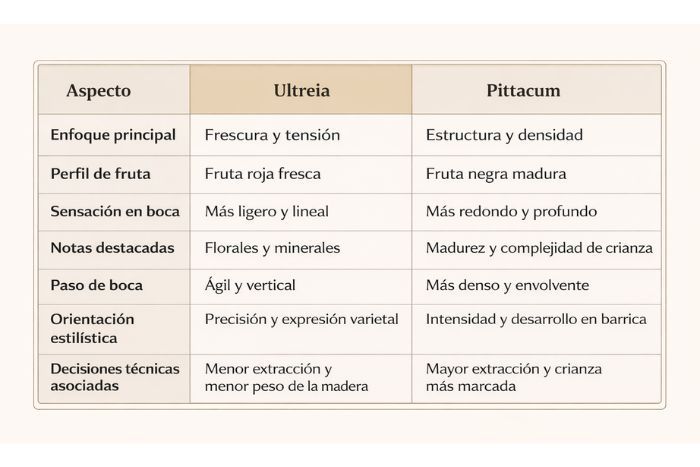
Ultreia emphasises freshness, red fruit and tension, while Pittacum prioritises darker fruit, structure and a denser mid-palate.
In direct comparison, Ultreia feels lighter and more linear. Pittacum feels rounder and deeper. One highlights floral and mineral notes. The other leans toward ripeness and ageing complexity.
These are stylistic decisions made in vineyard management, extraction and ageing. Neither approach is superior in absolute terms.
Which should you choose: Ultreia or Pittacum?
Choose Ultreia for freshness and lighter dishes; choose Pittacum for richer meals and greater structure, depth and cellaring potential.
Pair Ultreia with roasted vegetables, poultry or Mediterranean dishes with bright flavours. Its acidity refreshes the palate and does not overpower food.
£10
Special offer available for a minimum purchase of £99. Discount voucher valid for four weeks from issue date. Cannot be used in conjunction with other promotions except for the free delivery special offer.
Select Pittacum for red meats, stews and slow-cooked dishes. Its structure stands up to intensity and benefits from time in the bottle.
The context matters. A relaxed meal may favour Ultreia’s agility. A focused tasting or ageing project may favour Pittacum’s depth.
How should you serve and taste these Mencía wines?
Serve both wines at 14 to 16°C and allow brief aeration to enhance aromatic complexity and texture.
Mencía responds well to oxygen. After opening, give the wine several minutes in the glass. Aromas often become more defined with air exposure.
If possible, taste them side by side. Start with Ultreia, then Pittacum, then return to the first glass. This comparison sharpens perception of structure, fruit profile and oak influence.
Are both wines made from old-vine Mencía?
Yes, both wines rely largely on old Mencía vines with low yields, though they interpret that raw material in different stylistic directions.
Old vines typically produce fewer grapes with greater concentration. In Bierzo, these vineyards form the backbone of many quality-focused projects.
Ultreia channels that concentration into tension and freshness. Pittacum channels it into body and ageing structure.
Understanding this difference helps you choose wine with clarity the next time you look for a Mencía from Bierzo.