Interview with Alejandro Vigil, from Bodegas Aleanna and El Enemigo
We spoke with Alejandro Vigil about Malbec, Cabernet Franc, terroir, and the role of location in Argentine wine. An accurate view, free of myths.
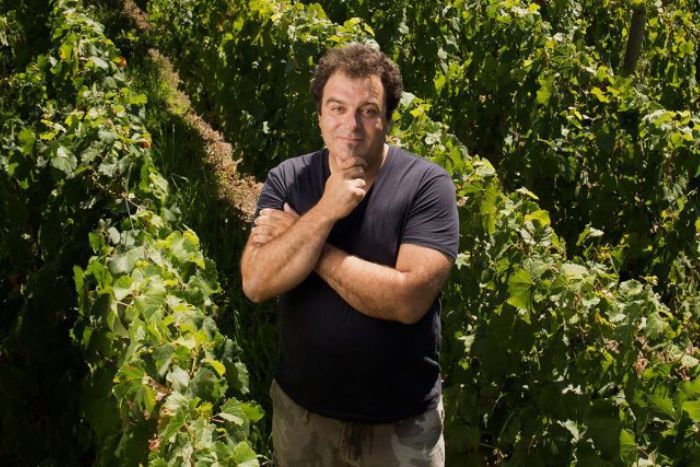
To speak with Alejandro Vigil is to speak of place, identity and precision. An agricultural engineer and restless soul at the helm of Bodegas Aleanna and the El Enemigo project, Vigil has become a key figure in the reinterpretation of varieties such as Malbec and Cabernet Franc in Mendoza.
His influence transcends Argentina's borders. The Mendoza winemaker has been included in the Master Winemaker Top 100 2026 compiled by the British publication The Drinks Business, a ranking that recognises the most influential and consistent professionals in the world of wine. This is not the first time his name has appeared on that list, as he was also recognised in 2023 and 2025.
In this conversation, we delve into his understanding of Argentinian wine, the real importance of terroir versus technique, and the influence that music, time and landscape have on his winemaking.
If you are interested in understanding why some wines excite without imposing themselves, you will find answers here.
1. Which wine would you always take home... other than your own?
I would take a wine that comes before the discourse. A classic Barolo, an old Rioja or a village Burgundy. Wines that don't shout, that walk slowly. I like wines that seem to whisper the soil, not those that seek applause. Because at home, wine is company, not spectacle.
2. Which area or variety would you like to make wine from, even if only out of curiosity?
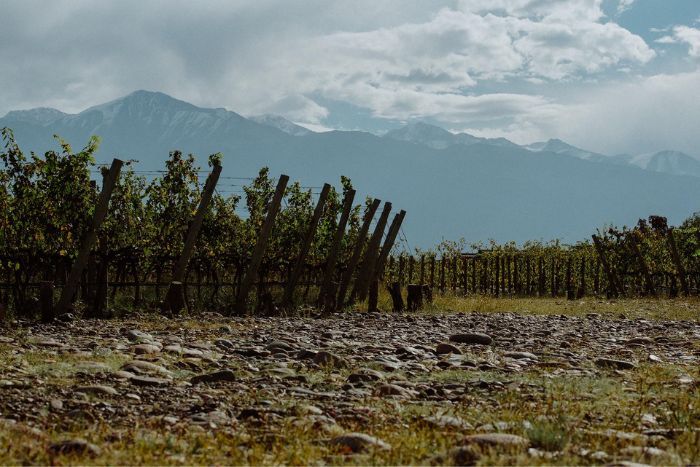
I am deeply intrigued by Garnacha from extreme granite soils and also Chenin Blanc in cold areas with living soils. But, if I'm honest, more than a variety, I'm obsessed with the place: high terraces, poor soils, stone that forces the roots to think. Locations where the plant must work hard. That's where wines with soul are born.
3. What wine myth would you like to dispel once and for all?
That wine is made in the winery. Wine is born in the vineyard; the winery merely translates it. Another myth I would like to dispel is that more concentration, more wood or a higher price mean greater greatness. Greatness in wine is precision, not weight.
4. What sets you apart from neighbouring wineries?
Our obsession with origin. We work thinking first about the soil, then the plant, and only at the end about the wine. We don't seek to impose a style, but to interpret. Each plot speaks differently, and our task is not to silence it with unnecessary technique.
5. If your wine had a soundtrack, what would it sound like?
Long silences, some classical music with contained tension and jazz. Lots of jazz.
Early morning jazz, a glass served without haste, where the structure exists but seems improvised. A double bass setting the pulse like natural acidity, a saxophone entering softly like the first nose, a trumpet that appears and retreats like the evolution in the glass.
Because wine, like jazz, has architecture, but breathes freedom. It is not performed: it is interpreted.
6. Would you be able to choose between music and wine?
No. Wine is liquid time, and music is emotional time. Both move us without asking permission. Choosing one would be to renounce a form of sensitivity.
7. What is it about your wine that you think defines you as a winemaker?
The constant search for the identity of the place. Long macerations when the vineyard allows it, whole bunches when balance demands it, respect for natural acidity and, above all, patience. I believe in wines that age well because they are born balanced, not corrected.
£10
Special offer available for a minimum purchase of £99. Discount voucher valid for four weeks from issue date. Cannot be used in conjunction with other promotions except for the free delivery special offer.
8. How do high scores affect the ego?
If you're not careful, they can inflate it dangerously. Scores can be a snapshot, but never the whole picture. The risk is that you start making wine for the number and not for the place. And when wine stops responding to the place, it loses its truth.
9. Why did Malbec triumph in Argentina and become marginalised in France?
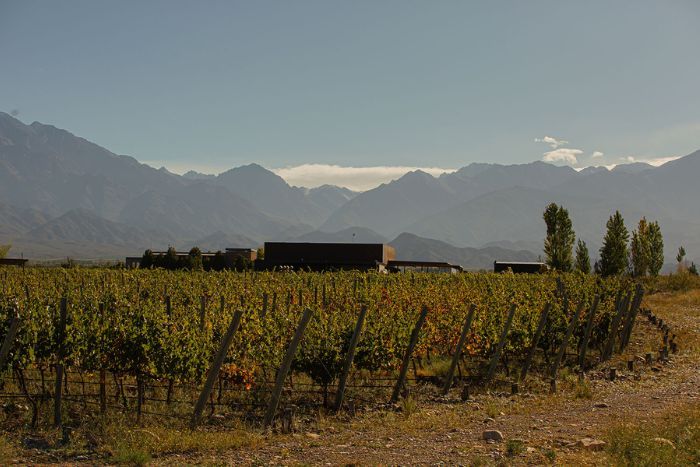
Because Malbec found light, thermal amplitude and altitude in Argentina that gave it its own identity. In France, it was part of a historical system; here, it became the protagonist. The dry climate, radiation and alluvial and calcareous soils allowed for an expression with unique fruit, structure and freshness. Argentina didn't just adopt it: it reinterpreted it.
10. What does Cabernet Franc have that Sauvignon does not?
Transparency. Cabernet Franc translates the place with extraordinary clarity. It has a natural tension based on acidity, a more floral and spicy finesse, and an architecture that can range from ethereal to deeply structured depending on the soil. In Mendoza, each place produces a different Franc, and that diversity is its greatest asset.
11. Is it true that you never drink your own wines?
Yes, I drink them, but with a different perspective. I don't drink them as a consumer; I drink them as someone returning to a place they know deeply. I taste them to understand their evolution, their consistency over time, their truth over the years.
But I'm also constantly looking for other wines. I usually take home bottles from other wineries, different regions and different styles. I try to drink wines that transport me to places I don't know, that take me out of my own landscape. In those foreign wines, I find new questions, learning and curiosity.
Because, deep down, drinking wines from other places is also travelling without moving, and that journey keeps your sensitivity alive.