

Ribera Del Duero Vs Rioja: How Do They Differ and Which One Should You Choose?
The definitive guide to terroir, grape varieties, ageing and organoleptic profiles of Spain’s two major red wine Designations of Origin (D.O.).
If there are two names that dominate the Spanish wine map and enjoy international prestige, they are undoubtedly Rioja (DOCa) and Ribera del Duero (DO). Although both designations of origin share the same leading grape (the prestigious Tempranillo variety), the wines they produce have markedly contrasting sensory identities.
Understanding what distinguishes a Rioja from a Ribera del Duero allows us to appreciate the direct impact of climate, altitude, soil and winemaking philosophy on a sing
1. Terroir and Climate: The geographical influence
Geography marks the first great point of divergence between the two regions:
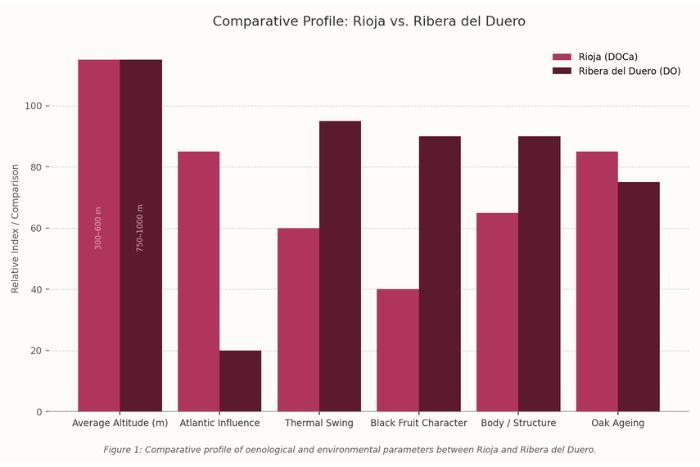
- Rioja (DOCa): Located along the valley of the River Ebro, it enjoys a moderate continental climate with valuable influences from both the Atlantic (to the north) and the Mediterranean (to the east). The vineyards sit mostly between 300 and 600 metres in altitude, which favours a slow, balanced ripening with a very fresh acidity.
- Ribera del Duero (DO): Situated on the northern plateau along the course of the River Duero, its vineyards lie at a higher altitude, typically between 750 and 1,000 metres. Its climate is extreme continental: freezing winters and dry, very hot summers, with day-to-night temperature swings of up to 20°C. This produces grapes with thicker, more concentrated skins.
2. The Grape Variety: Single varietals vs. Blends
Although Tempranillo reigns supreme in both regions, the way it is worked with varies substantially:
- In Rioja, Tempranillo is traditionally complemented through blending (coupages) with other native varieties such as Garnacha (which contributes body and fresh fruit), Graciano (which contributes acidity and ageing potential) and Mazuelo/Cariñena (which contributes tannin and colour).
- In Ribera del Duero, the local variety of Tempranillo is known as Tinta del País or Tinto Fino. Here, single-varietal wines (100% Tinta del País) or blends with authorised international varieties such as Cabernet Sauvignon, Merlot and Malbec tend to predominate.
3. Ageing and Wood: American Oak vs. French Oak
The tradition of barrel ageing defines the aroma and texture on the palate:
- Rioja: A pioneer in the use of American oak. This type of wood imparts characteristic sweetish notes such as vanilla, coconut, dill, leather and balsamic notes, rounding off the wine after long ageing periods.
- Ribera del Duero: Favours French oak (with a finer grain) for the most part, sometimes combined with new American oak. It contributes nuances of dark spices, clove, pepper, roasted notes, cocoa and fine woods, respecting the intense ripe fruit of the grape.
4. Comparative Summary Table
Factor |
Rioja (DOCa) |
Ribera del Duero (DO) |
|---|---|---|
Designation |
Denominación de Origen Calificada (DOCa) | Denominación de Origen (DO) |
Vineyard Altitude |
300 – 600 metres | 750 – 1,000 metres |
Dominant Climate |
Continental with Atlantic and Mediterranean influences | Extreme Continental (Great temperature swings) |
Main Grape |
Tempranillo (blended with Garnacha, Graciano, Mazuelo) | Tinta del País / Tinto Fino (alone or with Cabernet / Merlot) |
Barrel Style |
Predominance of American Oak | Predominance of French Oak |
Profile in the Glass |
Elegant, silky, fresh, spiced, polished acidity | Powerful, full-bodied, structured, ripe black fruit |
5. Recommended Pairing
What to serve with each wine?
Pairing for Rioja: Excellent with white meats, roast poultry, traditional lechazo (roast lamb), acorn-fed Iberian ham, legume stews, mushrooms and semi-cured cheeses. Its balanced acidity cleanses the palate to perfection.
Pairing for Ribera del Duero: Calls for dishes with greater structure and richness: aged beef T-bone steaks, big game (venison, wild boar), hearty Castilian roasts, spiced stews and mature or aged cheeses.
Frequently Asked Questions (FAQ)
Which is more expensive, a Rioja or a Ribera del Duero?
Both regions offer a wide range of prices, from very accessible entry-level wines (€8-12) to collector's and icon bottles that go for hundreds of euros. Generally speaking, Ribera del Duero tends to have a slightly higher average price due to lower yields per hectare.
Which wine makes the better gift?
For classic palates who prefer smooth, silky, easy-drinking wines, a Rioja Crianza or Reserva is a safe bet. If the recipient prefers full-bodied, intense and powerful wines, a Ribera del Duero will be the winning choice.