

How to Store Wine at Home
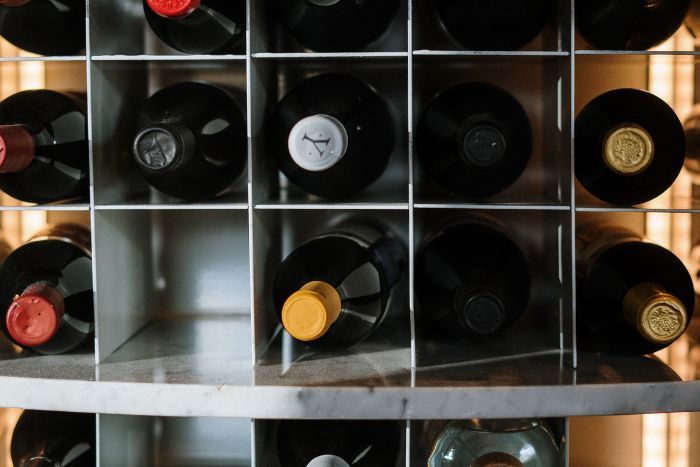
Wine keeps well at home if four basic conditions are met: a stable temperature between 12 and 16 degrees, no direct light, sufficient humidity to prevent the cork from drying out, and a horizontal position for wines with a cork stopper.
You don't need a professional cellar; a dark interior cupboard, away from heat sources, does the job perfectly for most wines.
Most wines that are bought don't need special storage conditions because they're intended to be drunk in the months following purchase. But if you have reservas, gran reserva, collectible wines, or simply want a bottle to keep well for several months at home, the conditions you store it in matter.
How long does wine keep at home?
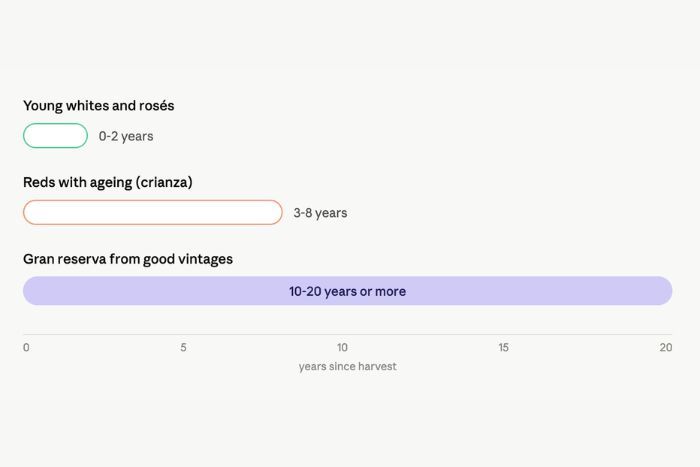
Not all wines keep in the same way. Most young white wines and rosés are intended to be drunk within a year or two of harvest. Red wines with ageing keep well for between three and eight years, depending on the winery and the vintage.
Good-vintage gran reserva wines can develop positively for ten, fifteen or even twenty years under the right conditions. Fortified wines such as Sherry, once opened, can keep for weeks or months thanks to their production process.
If you're unsure about the ageing potential of a particular wine, you can check our article on the differences between crianza, reserva and gran reserva.
Temperature, the most important factor
The ideal storage temperature for wine is between 12 and 16 degrees Celsius. The important thing isn't hitting that exact figure but keeping a stable temperature. Sudden changes in temperature are more damaging than a temperature that's slightly high or low but constant.
At temperatures above 20 degrees, wine ages faster and can lose freshness and structure. Below 8 degrees, its development almost stops altogether, which isn't a problem in the short term, but isn't ideal for long-term storage either.
The domestic fridge, which sits at around 4-6 degrees and has frequent temperature changes from the door being opened, isn't a good place to store wine for months, although it's fine for chilling a bottle before serving.
Light
Ultraviolet light breaks down wine's aromatic compounds and can alter its flavour over time. That's why quality wine bottles are always made of dark glass. At home, the main enemy is direct sunlight. A dark interior cupboard or a space under the stairs is perfectly suitable. Diffuse artificial light isn't a significant problem.
Humidity
A relative humidity of between 60 and 80% is ideal for storing wine. If the environment is too dry, the cork stopper can shrink, let air in and oxidise the wine. If there's too much humidity, mould can appear on the outside of the bottle, although this doesn't affect the wine itself as long as the cork is in good condition.
At home, if you don't have a space with controlled humidity, it's enough not to store the wine near sources of dry heat such as radiators or central heating.
The position of the bottle
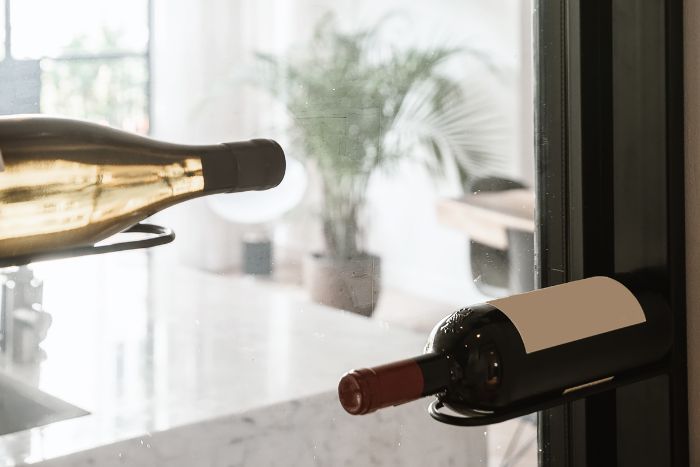
Bottles with a natural cork stopper should be stored in a horizontal position. This keeps the cork in contact with the wine, so it stays moist and doesn't shrink. A bottle with a cork stopper stored upright for months runs the risk of the cork drying out and letting air in.
Bottles with a screw cap or synthetic cork can be stored upright without any problem, as they don't rely on humidity to keep their seal.
Sparkling wines should also be stored horizontally or slightly tilted, and always somewhere cool to preserve their internal pressure.
Vibrations and odours
Constant vibrations disturb the sediment in aged wines and can interfere with their development. Avoid storing wine on top of the washing machine, next to the fridge or near speakers.
Strong odours can seep through the cork if exposure is prolonged. It's not advisable to store wine next to cleaning products, paint or highly aromatic foods.
Practical solutions without a cellar
If you don't have a cellar or a special space for wine, these are the most realistic options:
An interior cupboard in a room without direct heating, dark and away from the kitchen, is the simplest solution and is enough for most wines.
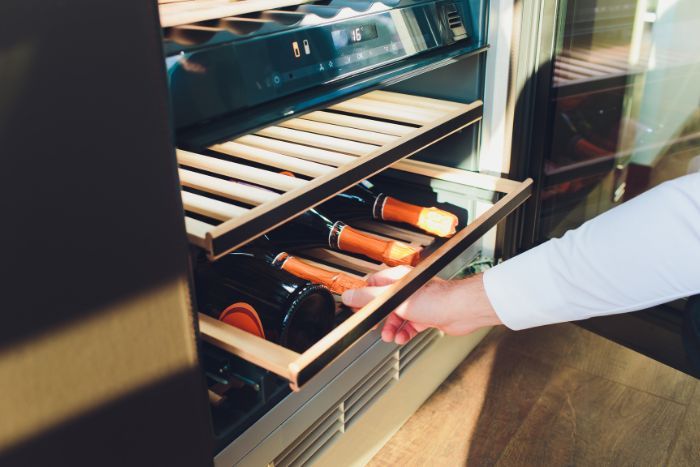
A domestic wine fridge is a fridge designed specifically to keep wine at a constant temperature between 10 and 18 degrees. Prices range from around 80 euros for ten or twelve bottles up to several hundred euros for larger collections.
A house's cellar or garage, if it doesn't have extreme temperature swings in summer, can be perfectly suitable.
And once you've opened the bottle?
An opened red wine, well sealed with its own cork or with an airtight stopper, keeps for two to four days somewhere cool. White wines and rosés keep a little less well, one or two days, and it's best to store them in the fridge once opened.
Fortified wines, such as dry Sherry, keep for weeks once opened thanks to their higher alcohol content. Sweet wines also keep well because of their sugar content.
At Vinissimus you'll find a selection of more than 16,000 red wine, white wine and sparkling wine references, with delivery in the UK.